
Why Pharmacists Decline Job Offers—and How to Fix It

Jana Rugg • February 2, 2026

Share this article

A hiring manager’s guide to spotting hidden risk signals and strengthening your employer brand with a practical self-assessment.

I speak with pharmacy leaders every week who are doing their best to build strong teams — yet still find themselves stuck with open roles that won’t close, or new hires who leave within months.

In one recent search, a client was convinced compensation was the problem. The offer was competitive. Benefits were solid. Still, multiple top pharmacist candidates walked away after final interviews.

When we dug deeper, the real issue wasn’t pay. It was risk.


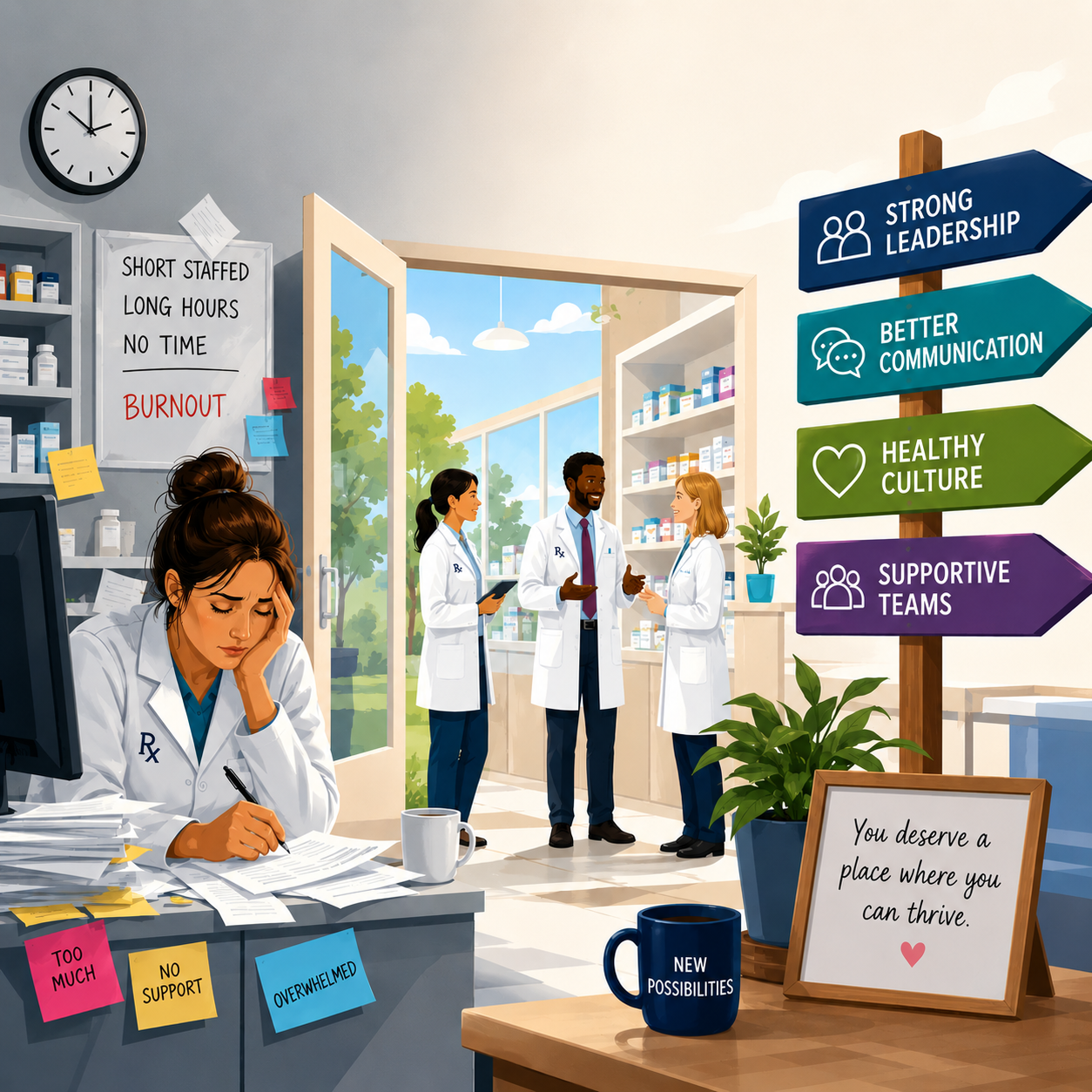
Candidates were quietly weighing concerns they didn’t always voice: being the only pharmacist during peak hours, feeling pressured when metrics conflict with patient safety, or lacking support when something goes wrong. Once those doubts take hold, no signing bonus can erase them.

That experience sparked this guide.


Today’s pharmacists aren’t just evaluating job descriptions — they’re reading between the lines. Every workplace sends signals about safety, support, and sustainability. This self-assessment is designed to help hiring managers identify those signals early, turn unspoken concerns into insight, and build trust long before an offer is accepted — or declined.


The most effective recruitment strategy today isn’t persuasion. It’s alignment. Organizations that understand how they are being evaluated — and address gaps in staffing, workload, and leadership support — consistently attract stronger candidates and retain pharmacists longer.

This Pharmacy Hiring Manager Self-Assessment uses a simple Good / Better / Best framework to help you view your organization through the eyes of today’s pharmacist workforce — so you can build an environment pharmacists choose, trust, and stay in.


Because in this hiring market, the real question isn’t whether pharmacists are evaluating you.

It’s whether you’re ready for what they’re seeing — and prepared to turn that insight into a competitive advantage.


How to Use This Self-Assessment

This guide is meant to help you see your organization as pharmacist candidates do — through the daily realities of staffing levels, workload expectations, leadership behavior, and safety culture. It isn’t about perfection. It’s about clarity.


Work through each section honestly using the Good / Better / Best scale. Base your answers on real day-to-day experience, not written policy. Where gaps appear, you’ve uncovered opportunities to strengthen trust, improve retention, and reduce operational risk.


Use this assessment as a working conversation with leadership and pharmacy staff. Focus on the areas where even small changes could meaningfully improve workload sustainability, patient safety, or team confidence. Organizations that take this step signal transparency, accountability, and a commitment to continuous improvement.


Most importantly, this tool provides a roadmap. When you understand how your environment is perceived — and act on what you learn — you position your organization to attract stronger candidates and build pharmacy teams that feel supported, engaged, and motivated to stay.

1. Staffing & Technician Support

Rate each statement: ☐ Good ☐ Better ☐ Best

 We consistently meet minimum pharmacist-to-technician coverage.

 Staffing scales during peak hours and high-volume days.

 We proactively recruit and retain pharmacy technicians.

 Pharmacists have protected verification or clinical time.


2. Workload & Metrics Alignment

Rate each statement: ☐ Good ☐ Better ☐ Best

 Prescription volume expectations are realistic and clearly communicated.

 Performance metrics balance speed with accuracy and quality.

 Leadership reviews workload sustainability regularly.

 Pharmacists can escalate workload concerns without penalty.


3. Patient Safety Culture

Rate each statement: ☐ Good ☐ Better ☐ Best

 We have a non-punitive error reporting process.

 Safety incidents are reviewed constructively.

 Near misses are discussed openly.

 Pharmacists are empowered to pause workflow for safety.


4. Clinical Role Support

Rate each statement: ☐ Good ☐ Better ☐ Best

 Clinical responsibilities are clearly defined.

 Training is provided for expanded services.

 Clinical time is protected during shifts.

 Pharmacists have autonomy in patient care decisions.


5. Scheduling & Work-Life Balance

Rate each statement: ☐ Good ☐ Better ☐ Best

 Schedules are posted well in advance.

 Weekend and holiday rotations are fair.

 Flexible scheduling options exist.

 Burnout prevention is actively addressed.


6. Leadership & Communication

Rate each statement: ☐ Good ☐ Better ☐ Best

 Pharmacy leadership is accessible.

 Feedback from pharmacists is acted upon.

 Communication around staffing and metrics is transparent.

 Pharmacists are involved in operational decisions.


7. Compensation & Career Growth

Rate each statement: ☐ Good ☐ Better ☐ Best

 Compensation is competitive for the role.

 Incentives align with quality outcomes.

 Continuing education is supported.

 Clear advancement pathways exist.

Next Steps: Turning Insight Into Action

Think of this assessment as a roadmap, not a scorecard. Used thoughtfully, it surfaces hidden risks and clarifies how to position your workplace as a destination employer for top pharmacy talent.


How to move forward:

  • Schedule a 60–90 minute working session with pharmacy leadership and key stakeholders
  • Set expectations for open, candid discussion — psychological safety matters
  • Look for patterns, not isolated incidents
  • Define clear action items, ownership, and timelines


Pay special attention to areas rated “Good.” These aren’t failures — they’re your fastest opportunities for improvement. Even modest changes in staffing models, communication practices, workload alignment, or safety culture can significantly strengthen pharmacist confidence, retention, and patient care.

Recent Posts

Image illustrating how managers helping their team shine lifts the entire organization.
By Jana Rugg January 14, 2026
A quiet conversation with a pharmacy leader reveals why pay and benefits alone don’t drive retention. Real alignment starts with psychological safety and honest communication.
Confident pharmacist in a pharmacy setting, reflecting thoughtful career evaluation and smarter job
By Jana Rugg January 1, 2026
Interview Smarter is a fact-based pharmacist job evaluation tool that helps you compare pharmacy roles, identify red flags, and choose work environments built for safety, support, and long-term career sustainability.
Frustrated pharmacist dealing with toxic coworker.
By Jana Rugg December 18, 2025
Short staffing doesn’t mean tolerating disrespect. Learn how to recognize toxic communication patterns and practice assertive leadership that protects morale, patient safety, and team trust.
503B pharmacist at work.
By Jana Rugg December 2, 2025
503B outsourcing facilities are transforming how pharmacy leaders hire sterile, QA, and compliance talent. Pharmacy recruiter Jana Rugg explains the shift — and how hiring managers can stay competitive in a candidate-short market.
Generationally diverse pharmacy professionals collaborating
By Jana Rugg November 19, 2025
Learn five practical ways pharmacy leaders can bridge generational gaps through kindness, communication, and collaboration to build stronger, more unified teams.
Safe Spaces
By Jana Rugg November 4, 2025
Learn how pharmacy leaders can build unity, trust, and focus amid a polarized climate. Ridgemont Resources shares how kindness and empathy improve retention and culture.
Pharmacist helping a customer
By Jana Rugg October 16, 2025
Discover 16 subtle yet powerful habits that help pharmacy professionals earn respect on their teams—from showing up early and speaking well of others to handling mistakes with humility. These simple behaviors can elevate your influence and leadership, even beyond credentials.
Temporary pharmacy staff onboarding
By Jana Rugg October 9, 2025
Uncover the true costs of unfilled shifts and how a proven specialty recruiter can help you efficiently fill contract and temporary staffing needs fast.
Good News
By Jana Rugg September 4, 2025
The pharmacist shortage is back! Recruiter Jana Rugg shares why hiring is tough again—and how employers and pharmacists can adapt in today’s employee-driven market.
Breakthrough or Burnout?
By Jana Rugg August 21, 2025
For many, burnout isn’t just about stress—it’s about stagnation. You know the workflow, you provide excellent patient care, but growth? Learn how to decide whether it’s time to level up—or walk away.
Show More